build.bvmcontracting.com

Tag: Renovation Know-how

  • Toronto’s HELP Program

    Toronto’s HELP Program

    Toronto’s Home Energy Loan Program

    As a top General Contractor in Toronto, BVM Contracting has worked with clients that have accessed renovation financing from a variety of sources. One great way to access renovation financing AND do right by the environment for your next home renovation is with The City of Toronto’s Home Energy Loan Program (HELP). This program allows eligible homeowners to access up to $75 000 as a low-interest loan from the City of Toronto to help pay for eligible home energy improvements.

    Eligible HOME ENERGY IMPROVEMENTS

    The following is a list of eligible improvements that can be covered by a loan from the Home Energy Loan Program:

    • High-efficiency furnaces/boilers/air conditioners

    • Air-source heat pumps*

    • Window / door replacements*

    • Basement/attic/exterior wall insulation

    • Air sealing (e.g. weather stripping or caulking)

    • Geothermal systems*

    • High-efficiency water heaters

    • Tankless water heaters

    • Drain-water heat recovery systems

    • Toilet replacements

    • Solar hot water systems*

    • Electric vehicle charging stations (Level 2)

    • Rooftop solar PV panels*

    • Battery storage

    *Qualifies for 20 year amortization

    Find out here about which home improvements gives you the best return on your investment and do not break the bank!

    The HELP program offers low interest loans, up to 20 year amortizations on eligible upgrades, and the loan can be paid off at any time! Of course there are eligibility requirements for the program so before you look too far into this program please look through the eligibility requirements below, as well as some information about the application process.

    HOMEOWNER Eligibility

    You may qualify for a low-interest loan through HELP if:

    • you own a detached, semi-detached, or row house;

    • all of the property owners on title consent to participate in the program;

    • your property tax and utility payments to the City are in good standing; and

    • you obtain written consent from your mortgage lender, if applicable*.

    *If your property has a mortgage, you will have to fill out a customized Lender Consent Form. Contact BVM Contracting to get access to the Lender Consent Form and start the process of getting approved by your lender for the program! The ratio of the remaining mortgage compared to the value of the home will dictate your ability to have access to this program.

    It is important to understand that you are still able to access other rebates and incentives at the same time as enrolling into the Home Energy Loan Program. Take a look through some of the other rebates and incentives that you have access to in our blog, or contact us to learn more.

    The Application Process

    Step 1: Complete an Application Form

    To access the application form, click here

    You can print and mail the application to the following address:

    Home Energy Loan Program
    Environment & Energy Division
    City of Toronto
    55 John Street, 2nd Floor
    Toronto, ON
    M5V 3C6

    You can also complete it online and email it to homeenergyloan@toronto.ca.

    Once the City of Toronto receives and approves your application, they will send you a funding offer that states the maximum amount that your property is eligible to receive through the Home Energy Loan Program (HELP). 

    If your home is subject to a mortgage, you will need to send your mortgage lender a letter of consent form to fill out. Your mortgage lender’s consent is required before the City can send you a funding offer. BVM Contracting can help you obtain this form and get consent from your lender, if needed.

    Step 2a: Home Energy Assessment and Funding Request

    Book a home energy assessment with an Energy Advisor registered by Natural Resources Canada.

    The assessment will include a basement-to-attic assessment of your home’s insulation, heating and cooling systems, and detect any air leaks or drafts.

    When the assessment is complete, you will receive:

    • A Renovation Upgrade Report with recommendations for specific improvements

    • An EnerGuide rating based on your home’s current energy performance

    • Information on available incentives and rebates

    For recommendations of Registered Energy Advisors and information on incentives and rebates available for home energy assessments, click here and scroll to the bottom of the blog, or contact BVM Contracting. We work with a network of Registered Energy Advisors that will be able to HELP!

    Step 2b: Submit your funding request

    Determine which improvements you wish to make and get a quote from the general contractor of your choice, based on your goals, budget and recommendations of the Energy Advisor. 

    Your funding request will include:

    • a list of the improvements you intend to undertake;

    • details and cost estimates based on the quote from your general contractor; and

    • the estimated incentive and rebate amounts available to you from the utility companies.

    BVM Contracting has completed many of these types of quotes and will be able to accurately price out the cost of each upgrade you decide to move forward with. We have also helped homeowners fill out the Funding Request Form to ensure that they are not missing out on any other incentives or rebates.

    Click here to access the Funding Request Form. 

    Step 3: Property Owner Agreement

    Once the City has approved your Funding Request, they will send you a Property Owner Agreement (POA), which is the funding agreement between the property owner(s) and the City.

    You must sign the POA and return to the City. Once the POA is approved by the City, they can provide, if requested, up to 30 per cent of the funds to help you get your project underway.

    If you are doing more renovations than the eligible items above (which is usually the case) and you are finding other ways to finance your build, visit BVM Contracting’s Financial Section of the website

    Step 4: Complete your improvements and submit your project completion report

    Homeowners assume full responsibility for the work performed, which includes selecting, hiring and paying the general contractor, and obtaining all required municipal and/or provincial permits, if applicable. BVM Contracting can help guide you through the permit process, if necessary.

    When your project is complete, book your post-retrofit home energy assessment with your Energy Advisor. The Advisor will verify the improvements and provide a new EnerGuide rating for your home.

    Submit a Project Completion Report (click here to access), signed by your Energy Advisor, along with your general contractor’s invoices and your new EnerGuide rating label. The City will then provide you with the remaining funds for your project.

    Step 5: Repay the loan over time via your property tax bill

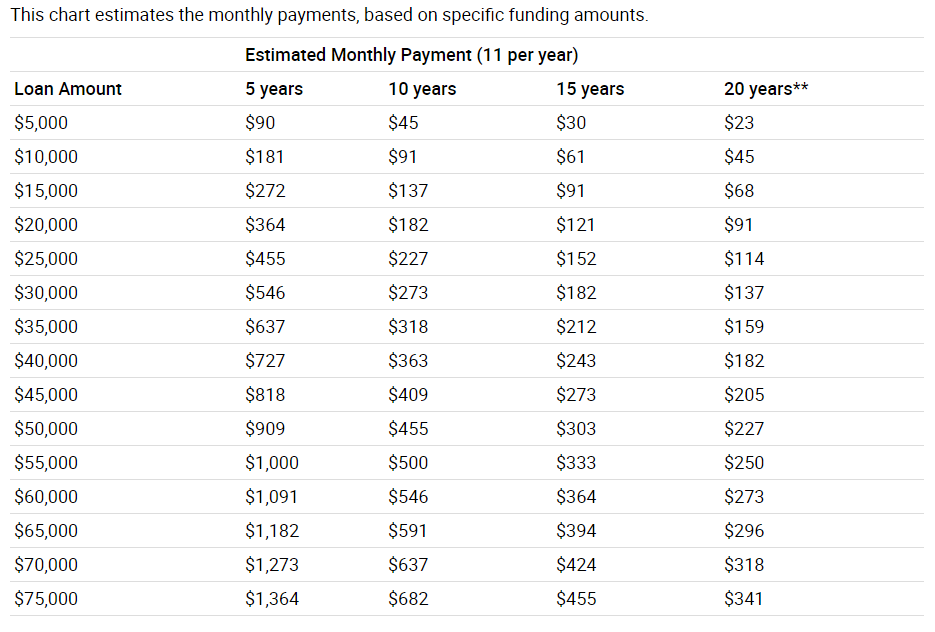
    Once your project is complete, the City will notify you when your loan payments will begin. The loan payments begin 2 months after the post-project completion date. You will be enrolled in the City’s Pre-authorized Tax Payment plan and repay the City via eleven monthly installments per year over the term of your loan.  Loan payments made via the property tax bill are treated in the same manner, and subject to the same penalties, remedies and lien priorities, as property taxes.

    At any time during the term of the loan, you may pay the outstanding balance, without penalty, to clear the loan from your property. Sometimes, depending on the renovations completed, homeowners can reappraise their home’s value and unlock some equity to put towards paying down the loan.

    Interest Rates and Terms for The Home Energy Loan Program

    The following interest rates are set for 2020 for the program:
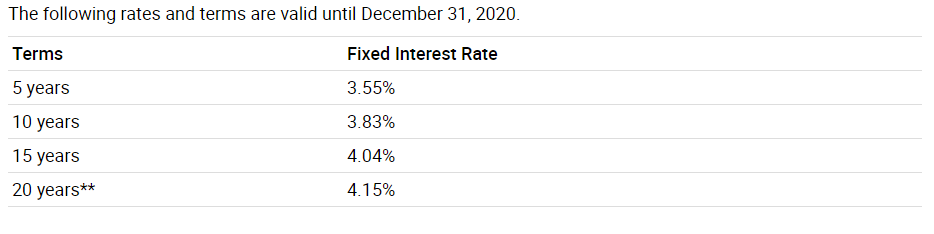
     Current interest rates for the Home Energy Loan Program
    Current interest rates for the Home Energy Loan Program

    It is important to note that:

    • An administrative charge of two per cent (2 per cent), which reflects the City’s cost of administering the program will be added.

    • The value of the loan, which will include the funding amount, interest, and an administrative charge, cannot exceed 10 per cent of the current value assessment (CVA) for your property, or $75,000, whichever is less.

    • Homeowners will repay the loan via their property tax bill and can pay off the loan at any time without penalty.

    Approximate Monthly Payment Based on Size of Loan
     

    Reasons to Choose HELP for your Renovation Project

    1. Enjoy low-interest rates and repayments terms of up to 20 years.

    2. Avoid the large upfront costs of home energy improvements and pay for them over time as you save on your energy bills.

    3. Repay the loan via installments on your property tax bill. You can pay off the loan at any time without penalty.

    4. Receive ongoing support from the HELP team and assistance accessing additional rebates incentives from Province of Ontario and utility companies.

    5. The loan will be attached to your property, not to you, the property owner. This means that if you sell your home before the loan is repaid, the new owner will assume the balance of the loan.

    In our opinion, if you are eligible for this program you should consider filling out an application. Need some help? Contact us and we can HELP you get the process started!

    BVM Contracting is committed to giving homeowners the best insight into different financing options for renovating their home. Further than providing renovation advice and industry trends, we also pride ourselves on being able to provide value to home owners before, during, and after renovations. 

    About BVM Contracting

    BVM Contracting is a full-service General Contractor or Home Builder located in Toronto. We provide home renovation and building services for major home renovations (kitchen renovations, bathroom renovations, basement renovations, full interior renovations, home additions, and new home construction). Our goal is to help guide our clients through the process of renovating their home, from concept to completion.

    Further than providing General Contracting and Project Management for major home renovations, we also offer value-added services such as renovation financing, renovation rebate consultations and services, building permit and design services, smart home installation services, and real estate investor services.

    To learn more about our offering by visiting our services page.
  • Do I Need a Building Permit?

    Do I Need a Building Permit?

    Building Permits Toronto

    “When do I need building permits?” is a question that we get a lot, and for a good reason. Knowing what types of renovations need permits and which do not is an important differentiation and will either add or subtract a step to your process of renovating.

    BVM Contracting always recommends getting a building permit when it is required, as it protects the home owner from poorly completed renovations and it keeps the general contractor or home builder accountable for doing the renovations correctly.

    Examples of renovations that do not require a building permit

    It is important to first differentiate the types of renovations and activities that do not require building permits, so there are some examples below that outline them.

    1. An uncovered platform (e.g. deck) provided: its finished deck level is not more than 60 cm (24 inches) above the adjacent finished grade; and/or it does not form part of an exit required under the building code; and complies with the Zoning Bylaw

    2. Installing a skylight in an existing building provided: the building is a house or small building (3 storeys or less) and the installation does not require the removal of more than one rafter, joist, or other similar structural member (with the exception of a truss)

    3. Re-cladding of a house or small building (3 storeys or less) with non-combustible material other than brick or stone veneer

    4. Adding or replacing insulation

    5. The replacement of windows or doors provided:

      • there is no change in the location or size of the window and/or door

      • the structural support for the opening (i.e. lintel) is not affected

      • and a new exit is not created

    6. Replacing a furnace or boiler in a house

    7. The installation of additional cooling systems, gas fireplaces, air cleaners, in-line humidifiers, or hot water tanks in a house

    8. Repairing and replacing plumbing fixtures

    9. Replacing existing roofing material provided no structural work is required

    10. Finishing a basement of a house, if:

      • the work does not include structural or material alterations

      • no additional dwelling unit(s) is (are) created (i.e. a second unit)

      • and the work does not include the installation of new plumbing

    11. Undertaking waterproofing repairs to a basement; Installation of cabinetry and millwork.

    12. Plastic Sheet Covered Accessory Structures (i.e. snow canopies, driveway tents, automotive canopy) do not require a building permit if installed on or after October 15th and are removed on or before April 15th. Compliance with the Zoning Bylaw is required

    13. Constructing a retaining wall that is on private property, not accessible to the public and/or where the height is less than 1 metre in height at any location

    14. A building permit is not required to install a sump pump

    This list is not complete, and your specific renovation ideas can be reviewed by BVM Contracting to determine whether or not you will need a building permit. Contact us to discuss further!

    When is A building permit required?

    Since the failure to not comply with local building codes will result in costly construction delays, it is important to understand when you will need a building permit. Here is a list of usually activities or renovations that will require building permits:

    1. Construct a new building

    2. Construct an addition to an existing building, such as:

      • second or third story home additions

      • attached garages, carports

      • sunrooms

      • solariums, porches, decks

    3. Make structural or material alterations, such as

      • adding or removing walls (i.e., changing room sizes and/or uses)

      • new windows or doors where there were none before

      • enlarging or relocating existing windows or doors

      • enclosing an existing deck, porch or patio of any size

    4. Construct an accessory structure larger than 10 square metres* (108 square feet) in area, such as

      • Detached Garage

      • Workshop

      • Garden shed

      • Carport

      • Pool house or cabana

      *Note: If you are constructing an accessory structure and it is attached to an existing building and/or has plumbing, regardless of its size, a building permit is required.

    5. Finishing a basement, if the work proposed includes any of the following,

      • structural or material alterations

      • installing or modifying heating and or plumbing systems

      • excavating and/or constructing foundations

      • basement underpinning

      • constructing a basement entrance

      • adding a second suite

    6. Energy and environmental building improvements, such as

      • roof top storm water retention systems

      • green roofs

      • structures used in the support of a wind turbine generator with a rated output of more than 3kW

      • solar projects such as installation of solar collector systems and solar hot water systems

    7. Construct a deck more than 60 centimetres (24 inches) above ground

    8. Construct a retaining wall more than one metre (3 feet 3 inches) in height provided the retaining wall is on or adjacent to public property (including streets), building entrances, and on private property accessible to the public

    9. Constructing a tent that

      • covers more than 60 metres squared (646 square feet); and/or

      • is attached to a building; and/or

      • is within 3 metres (9 feet 10 inches) from another structure.

    10. Demolish or remove all, or a portion of a building

    11. Install or reconstruct a chimney or fireplace

    12. Install a wood burning stove or fireplace

    13. Install or modify heating and or plumbing systems

    14. Install a backwater valve. Please visit our blog about the City of Toronto’s Basement Flooding Protection Program to learn how to subsidize this activity.

    15. Install a backflow prevention device.

    16. Change a building’s use (i.e. from residential to office or single dwelling unit house to multi-dwelling unit house). Even if no construction is proposed, if a change of use is proposed a building permit is required.

    Still don’t know if your renovation project needs a building permit?

    If you are still confused about whether or not you need a permit, please contact BVM Contracting to schedule a consultation to determine how to start your renovation journey! We are looking forward to starting the conversation!

    About BVM COntracting

    BVM Contracting is a full-service General Contractor or Home Builder located in Toronto. We provide home renovation and building services for major home renovations (kitchen renovations, bathroom renovations, basement renovations, full interior renovations, home additions, and new home construction). Our goal is to help guide our clients through the process of renovating their home, from concept to completion.

    Further than providing General Contracting and Project Management for major home renovations, we also offer value-added services such as renovation financing, renovation rebate consultations and services, building permit and design services, smart home installation services, and real estate investor services.

    To learn more about our offering by visiting our services page.

  • Efficient Home Energy Upgrades

    Efficient Home Energy Upgrades

    Environmentally Friendly Upgrades

    For Your Home or Condo

    You don’t need to work with a Registered Energy Advisor to figure out which energy efficiency upgrades will save you the most money and give you a clear return on investment. Further than energy savings, there are also some other upgrades you can make to save money and do better for the environment. 

    As a home builder that has seen it all, BVM Contracting has compiled the top 4 upgrades that you can make to your home (if you haven’t already done so) and don’t break the bank.

    Upgrade your Incandescent Lighting to CFL’s or LED

    Since electricity is not cheap but upgrading your lighting to more efficient bulbs to CFL’s or LED is cost-effective this upgrade is a no-brainer. The cost to upgrade lighting will cost you less than $100 in an average-sized bungalow, and provide a return on investment in less than one year!

    Install a Programmable Thermostat

    With a programmable thermostat you can adjust the times you turn on the heating or air-conditioning according to a pre-set schedule. Programmable thermostats can store and repeat multiple daily settings (six or more temperature settings a day) that you can manually override without affecting the rest of the daily or weekly program. You can save as much as 10% a year on heating and cooling by simply turning your thermostat back 3-4 °C for 8 hours a day from its normal setting. Programmable thermostats are not very expensive and usually cost between $50-$100 for a return on investment of about 1-2 years.

    If you would like to upgrade to a smart programmable thermostat (Ecobee and Nest), it will cost more but you will have additional features included that can save you more money over time. The benefit of investing in a smart thermostat is you can claim a $75 rebate from Enbridge to subsidize the cost and keep your return on investment healthy!

    Seal your home to prevent air infiltration

    Sealing around your windows, doors, attic, vents, and any other part of your home that causes a draft will substantially decrease your home’s heating and cooling requirements. The cost to seal an average-sized bungalow will cost around $800-1000, but will give a return on investment from the energy savings within 4-5 years. Not to mention, Enbridge has a program that will allow you to subsidize the cost of air sealing. Check out our blog here to learn more about how much money you can save by sealing your home.

    Install low-flow toilets and shower fixtures

    The installation of low flow toilets and shower fixtures into your home can give a return on investment between 3-5 years depending on if you install the fixtures yourself or get a plumber to install. Since shower fixtures use more water it is recommended to upgrade these first. Even further than that, if you have multiple showers, install the low-flow fixtures on the higher-use showers first then work your way down to the lesser used fixtures.

    Want to find out more ways to improve your homes energy efficiency?

    If you are trying to come up with more ways to make your home more energy efficient, please reach out to us and we can start the conversation. Our goal is to provide unbiased advice for the best energy efficiency upgrades to your home, so we are looking forward to starting a conversation!

    We will be able to also recommend the right Home Energy Advisor to partner with should you decide to enroll into the Home Energy Loan Program or Enbridge Home Efficiency Program

    About BVM COntracting

    BVM Contracting is a full-service General Contractor or Home Builder located in Toronto. We provide home renovation and building services for major home renovations (kitchen renovations, bathroom renovations, basement renovations, full interior renovations, home additions, and new home construction). Our goal is to help guide our clients through the process of renovating their home, from concept to completion.

    Further than providing General Contracting and Project Management for major home renovations, we also offer value-added services such as renovation financing, renovation rebate consultations and services, building permit and design services, smart home installation services, and real estate investor services.

    To learn more about our offering by visiting our services page.
  • Enbridge Home Efficiency Rebate Program

    Enbridge Home Efficiency Rebate Program

    Home Efficiency Rebate Program

    Enbridge

    Chances are that if you live in Toronto (or the surrounding area) and own a home you have an account with Enbridge Gas. If you currently are a natural gas customer with Enbridge you can qualify for one of the following rebate or savings programs that allow you to live in a home that is more comfortable and less drafty:

    1. Home Efficiency Rebate Program

    2. Winterproofing Program

    3. Smart Thermostat Purchase Incentive Program

    Below, we talk about the most lucrative program of the three, which is the Home Efficiency Rebate Program. Check out the info below to see if you will qualify for the program, as well as how to get the rebate!

    The HOME EFFICIENCY REBATE PROGRAM

    This program allows homeowners to receive rebates of up to $5000 for eligible energy efficiency upgrades. Before we dive into it we will go over who qualifies for this program.

    How do I qualify?

    • You need to have an Enbridge gas account. If your home isn’t run on Natural Gas you will not qualify.

    • You have to reside in and own a home. Currently condos and other multi-unit apartments are not eligible.

    • To receive the incentive/reimbursement, you must complete at least two eligible upgrades to your home.

    What are the eligible energy efficiency upgrades that I can qualify for?

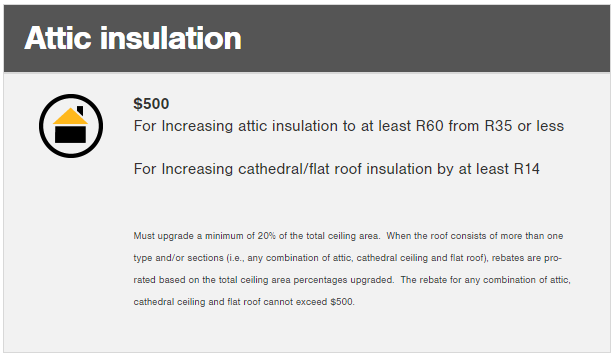
     Attic Insulation Upgrade
    Attic Insulation Upgrade
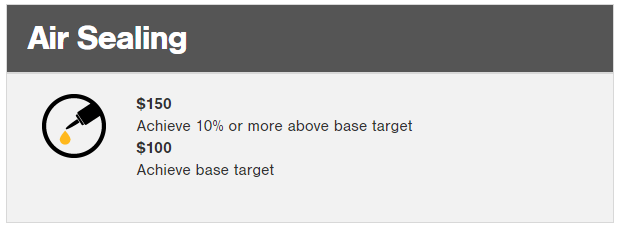
     Air sealing upgrade
    Air sealing upgrade
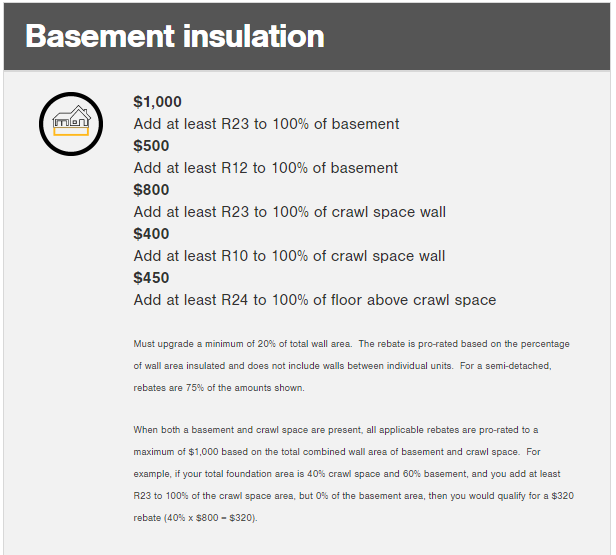
     Basement insulation upgrade
    Basement insulation upgrade
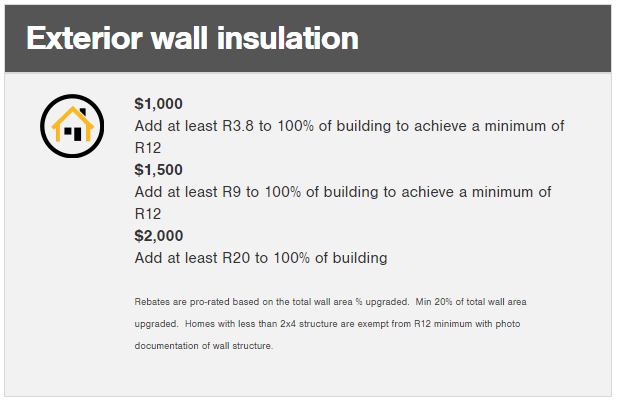
     Exterior wall insulation upgrade
    Exterior wall insulation upgrade
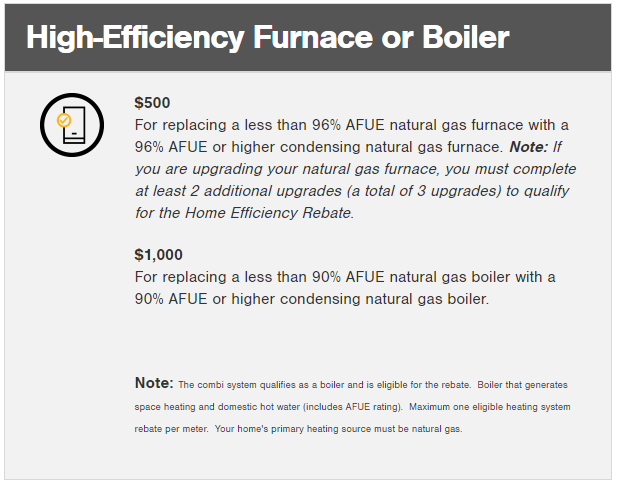
     High-efficiency furnace or boiler upgrade
    High-efficiency furnace or boiler upgrade
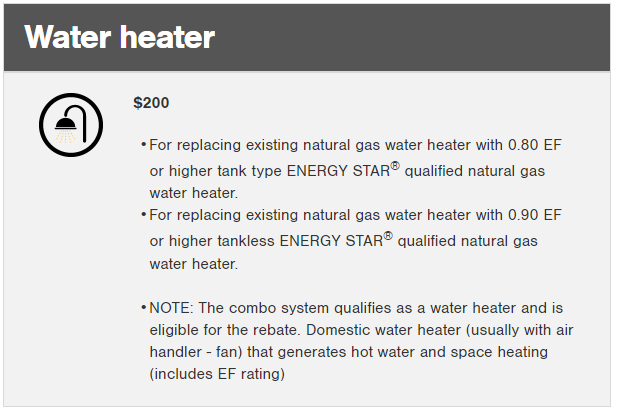
     Water heater upgrade
    Water heater upgrade

    Please ensure that you read through each of these upgrades in order to get to know which ones might be the right fit for when you complete your home renovation or upgrades. Even better, through this program Enbridge requires that you complete a home energy assessment for your home to better understand which of these upgrades are eligible and most beneficial to your home. See the below steps on how to complete the audit, as well as the overall process for ensuring that you get access to the rebate and incentive money.

    The process of completing the Home Efficiency Rebate Program

    Follow these steps to ensure that you can get access to the rebate:

    Step 1: Complete an audit of your home with a Registered Energy Advisor (REA). You can schedule your initial energy assessment with any of the approved REA’s show below. When you successfully complete the upgrades, you will be reimbursed $550 for the cost of the pre and post assessments as part of your incentive cheque.

    Step 2: Complete two or more of the recommended upgrades provided by the advisor. As the homeowner, you can work with a general contractor of your choice.

    Step 3: Book your post-renovation energy assessment with the same Register Energy Advisor to validate the work has been completed.

    Step 4: Receive your incentive cheque in 8-10 weeks.

    Other important facts about this program

    • The maximum amount you can receive with this program is $5 000, and that is if you complete all of the above-listed activities. If you are only completing this program and no other renovations to your home BVM Contracting recommends working with your energy advisor to complete the upgrades that will give you the biggest bang for your buck (i.e. attic insulation and air sealing and both low hanging fruit usually).

    • The reason why a Registered Energy Advisor is used for this program is to help add a level of standardization and consistency to the program. You should expect the following from a Registered Energy Advisor

      • Prioritize your upgrades to get the maximum incentive available

      • Help you understand the payback period for the upgrades being considered

      • Reduce air leaks and identify why your house is cold in the winter and hot in the summer

      • Understand your home’s envelope and determine if additional “controlled” air flow is required

      • Determine if energy upgrades were installed as per recommendations

    • Instead of reaching out to Enbridge for this program, just reach out to a Registered Energy Advisor and determine if your qualify. They will be able to determine your eligibility.

    Are you completing Renovations to your home and want to apply for this program?

    If you are interested in this program and are also completing a major renovation to your home (full interior, basement apartment, home addition, etc.) it would be wise to enroll into this program and upgrade as much as possible. You will be working closely with both your General Contractor or Home Builder and Register Energy Advisor in this scenario so make sure you make the most of your investment and maximize your rebate from Enbridge.

    Just make sure that the pre-audit is scheduled before any renovations commence. BVM Contracting has worked with clients completing these rebates and would be able to help with the scheduling.

    Working with a Qualified General Contractor or Home Builder

    Working with a knowledgeable General Contractor or Home Builder in the Greater Toronto Area comes with many benefits, including getting to know where you can save money and how to complete your renovations most efficiently. For any renovation customers that BVM Contracting works with, we complete a complementary review of which rebates and incentives you will have access to based on the proposed home renovations.

    Please contact BVM Contracting if you would like to complete a complementary consultation of your home renovation options and/or ideas, we would love to start the conversation!

    ABOUT BVM CONTRACTING

    BVM Contracting is a full-service General Contractor or Home Builder located in Toronto. We provide home renovation and building services for major home renovations (kitchen renovations, bathroom renovations, basement renovations, full interior renovations, home additions, and new home construction). Our goal is to help guide our clients through the process of renovating their home, from concept to completion.

    Further than providing General Contracting and Project Management for major home renovations, we also offer value-added services such as renovation financing, renovation rebate consultations and services, building permit and design services, smart home installation services, and real estate investor services.

    To learn more about our offering by visiting our services page.
  • Recirculating Home Shower Systems

    Recirculating Home Shower Systems

    Recirculating Water Showers

    How do you shower for a longer period of time but use less water? Seems a little tricky until you start to understand the science behind recirculating water showers. The technology of recirculating water showers is still very new with only a couple of companies trying to create an industry out of it. Nonetheless, it is still a very exciting idea that, if successful, will lead to a very large reduction in water usage across the world.

    What is a recirculating Water Shower?

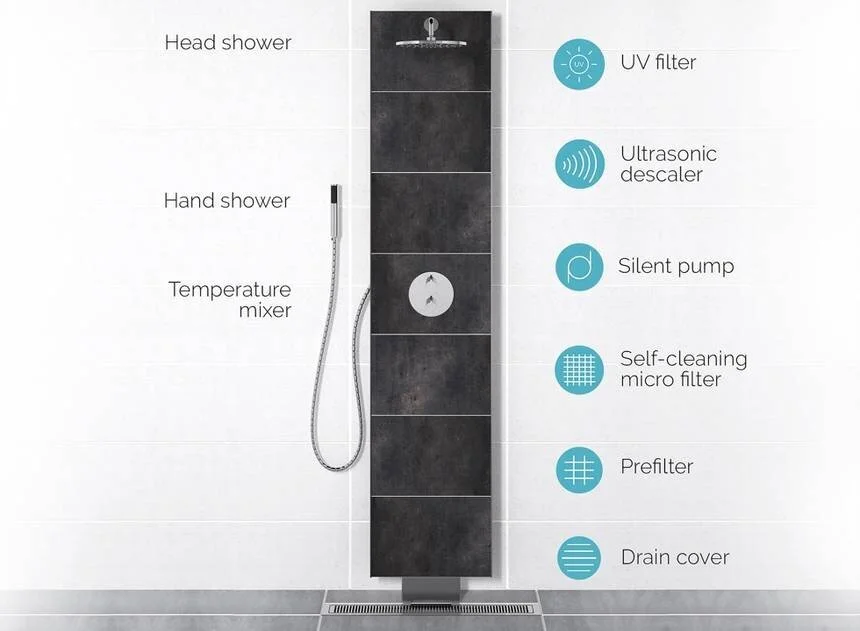
    A recirculating water shower is a new technology that is capable of recycling water through a semi-closed loop system for reuse during showers. It was NASA-inspired technology that combated the issue of water scarcity in space. Since water scarcity is also becoming a larger and larger issue on our home planet there is a real-world use-case for this technology. In order for the water to be reused it has to be filtered, cleaned, UV treated, and reheated in order to maintain the correct level of purity and temperature humans enjoy today. In fact, due to the filtration steps in this technology, they claim that the water is more pure than the domestic water supplied to the system, pretty neat!

    Savings numbers for a recirculating water shower

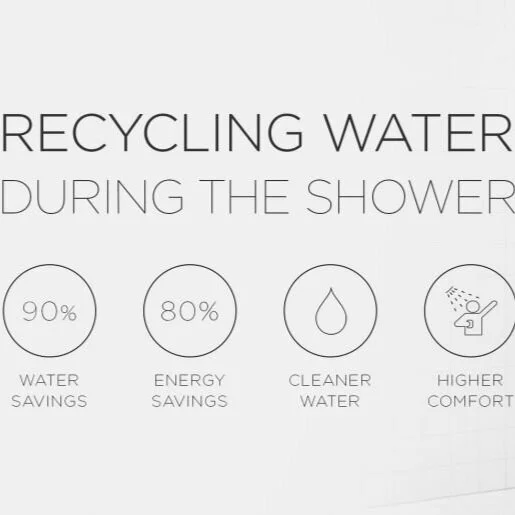
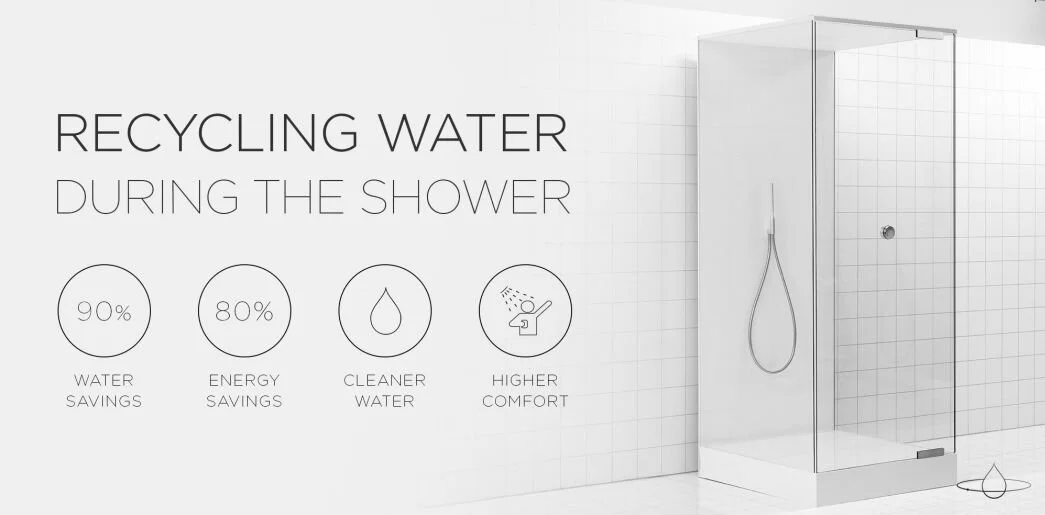
    Supposedly, the savings numbers for this technology are staggeringly high for water and energy. The claim is that this technology can save up to 90% in water and up to 80% in energy compared to a conventional shower system. Since these systems need to operate in a semi-closed manner (sometimes draining to maintain proper levels of purity) that is where the 10% usage of water comes in. The combined savings in water and energy would be pretty awesome for a high use shower system!

    Like any new technology, the cost to manufacture is high

    Since the technology is still fairly new, the cost to supply and install is high. In checking Orbital Systems’ (the current leader in this space) website, they are selling their standard unit for 3 899 pounds (or $6 650 CAD). This is only for the supply of the system. Once the technology gets more commercialized and streamlined this cost will go down, but will still be more expensive than a normal shower.

    Is this product currently available in canada?

    Not yet, but it looks like there are plans to expand to the North American market. So far it looks like only a few European countries have supply chains for the product (Denmark, Sweden, Great Britain).

    Possible applications for when the technology comes to north America

    Where I see this technology thriving at first will be in higher-use shower applications, that is where people will realize a return on investment first. Places like gyms and hockey arenas where there are communal and frequent use of showers. The next area will be in homes that are targeting net-zero or better energy usage. Since the shower saves on both water and energy, this will be a great way to gain the net-zero accreditation for sustainable homes.

    Conclusion

    I cannot wait to see when this technology hits the North American market, and I will try to update the content in this blog once that day comes.

    About Home Innovation Spotlight

    BVM Contracting is committed to finding and writing about innovative technology, products, and services that are transforming the home and construction industry. In order to be the best General Contractor and Home Builder that we can be, it is important to stay in the loop on new trends and give people insight about the fun and exciting things coming to your home in the future!

    ABOUT BVM CONTRACTING

    BVM Contracting is a full-service General Contractor or Home Builder located in Toronto. We provide home renovation and building services for major home renovations (kitchen renovations, bathroom renovations, basement renovations, full interior renovations, home additions, and new home construction). Our goal is to help guide our clients through the process of renovating their home, from concept to completion.

    Further than providing General Contracting and Project Management for major home renovations, we also offer value-added services such as renovation financing, renovation rebate consultations and services, building permit and design services, smart home installation services, and real estate investor services.

    To learn more about our offering by visiting our services page.