Renovating Toronto
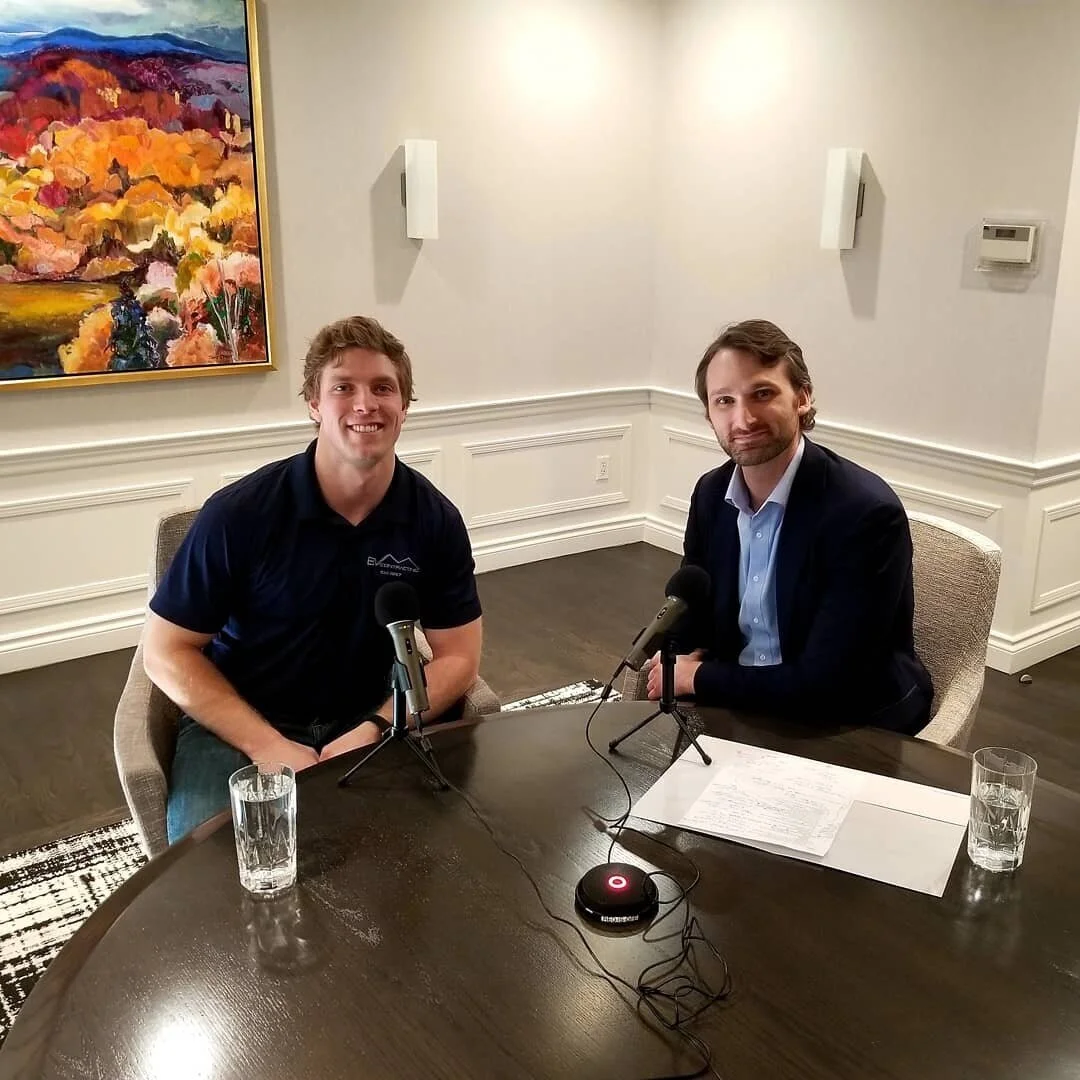
Episode 1 with Brayden Irwin
Real Estate Investing
The Renovating Toronto Podcast is a multi-media outlet owned and operated by BVM Contracting, a Home Builder and General Contractor in Toronto.
The goal of this podcast is to educate and enlighten consumers of Toronto, whether you are a seasoned real estate investor or a young professional looking to buy your first home, to allow people to understand the complete life-cycle of home ownership. This includes the buying process, renovation process, maintenance, selling process, refinancing your home and everything in between!
Through the insights of many smart and knowledgeable guests on the show, we go on a journey to learn everything there is to know about home ownership, and we invite you to come along for the ride!
INTRODUCING BRAYDEN IRWIN
Brayden Irwin works for the Lome Irwin Real Estate Team and has been working under his Mother, Carol Lome, for 5 years. The Lome Irwin Real Estate Team focuses on residential resale transactions, helping clients buy and sell their primary residences. Additionally, the Lome Irwin Real Estate Team helps real estate investors find properties of interest for their real estate portfolios.
Brayden himself is also an experienced real estate investor, which is the focal point of Episode One below. Brayden talks about his investing style, how he got started, how his portfolio has progressed, and next steps for his real estate investment portfolio.
VIDEO TRANSCRIPT
Question 1: I know you have a lot of experience with real estate, from both the investor standpoint as well as working with clients to buy homes. First thing I wanted to do is get your take on yourself as a Real Estate Investor.
For me, I’m very long on real estate investing. I know there are lots of people in the area that love to buy houses, fix them up and sell them. That’s not what I love to do personally. I am really big believer in buying and holding for the following reasons:
-
You have the benefit of time, which allows you to gain wealth over time. It is not a get rich quick strategy!
-
It is less of an upfront investment compared to buying and flipping or buying and renovating.
-
You are not as susceptible to short term market trends that many home flipping investors deal with.
-
The cost to transact real estate in Toronto is high so holding onto your real estate investments allows you to avoid having to pay large fees to sell your real estate.
I think there’s a lot of efficiency gained when you can actually buy something and hold it over a long period of time.
Question 2: What does your real estate portfolio consist of? What did you start with?
I started out with pre-construction condos. It was about six or seven years ago when I bought my first pre-construction condo. The big factor for me was just affordability, I didn’t have a down-payment readily available. What the pre-construction market allows you to do is put 5% increments down over time. So if you don’t have the full 20% down-payment of the purchase price up front, the payment structure over time allows you to pay that down over a two or three year process, depending on how early you buy in the project.
I bought my first one and slowly got my down-payment paid off and then was able to close on that once it came time. Then I was looking for the next opportunity to do a similar thing. I ended up buying another pre-construction condo. This was done based on what I could afford to buy, but then I actually got some great advice from my boss/Mother. She’s a real believer in owning land. You hear a lot of people say they’re not making any more land. Owning land allows you to do things that you’re unable to do in condos. The cost to enter that market is a little bit higher but typically your returns are better than renting condos. You’re able to sort of maximize your returns on those investments.
Question 3: How do you utilize your portfolio to make further investments? And were there any strategies that you’ve used to ramp-up the speed of your real estate portfolio growth?
I think getting started for for people is the hardest part because human nature is to be a little bit impatient. The reality is you have to start with one property and that’s why for me the strategy was just getting started. What you can gain over time and what you’re able to do with some of the equity that you build up in that property over time allows you to start building that portfolio at a faster pace.
The reality for a lot of people in Toronto is it’s a very expensive city to live in. It has become a world class city and with that comes world class cost of living. Most people can actually afford to own a home in Toronto, the hard part is that they may not have that down-payment. I was very fortunate that, you know, I had the ability to save up some money when I was younger I bought a condo that was pre-construction that I didn’t end up moving into for several, several years after I’d actually put my money down.
My personal cost of living is relatively low. I take probably 70% of what I’m able to earn and I put it aside to re-invest it. When you’re getting started, you’re usually relying heavily on your income. I bought my first pre-construction condo in 2013. Fast forward five years later, I was able to actually refinance that property and pull equity out of that, that I used to then buy an income property. What it allowed me to do was leverage the asset that I already owned, and purchase another property which will now start to be doing the exact same thing and that’s where you can get that multiplier effect which allows you over time to start to build that portfolio.
Question 4: Do you see anything that you haven’t invested in already that you would want to future? What is the next step with your real estate portfolio?
As you’re able to increase the number of units (i.e. the number of doors that you have under one roof) I think that becomes your multiplier effect. You’re kind of limited with condos where you can only rent for a certain amount, which is market driven. But if you’re able to take a house and create two units, then you start to be able to increase the amount of rent you’re able to get. What we are transitioning more into new is smaller apartment buildings. For me that is the next step beyond traditional semi or detached rentals that split up into units. I think that there’s some efficiencies there on the expense side for multi-family investment but also if you’re able to find the right property, typically they’re under market value, and rents in over time as you’re able to bring those up to up to market. I think there’s a lot of value there. So that’s what I transitioned into after the single family or the freehold sort of smaller single family rental market.
As you go up that ladder of types of rentals, the cost to get into the market obviously becomes higher and higher. With the apartment building we just closed on I was able to find investors that were like-minded and were looking for similar types of investments. We ended up buying it as a Corporation. So, again, you know, that might be an opportunity for other you know, like minded investors even you know, if you’re thinking about buying a condo or a, you know, a small house or whatever that might be, it might be an opportunity there. Again, if structured properly, everyone’s on the same page, you want to protect yourself. Yeah, everyone needs to be able to feel confident that their investment is going to be protected. And that the devil is kind of vision is is you know, similar so there you don’t get into a scenario where all of a sudden kind of regretting you know, what’s what you’ve done, but I think it presents an opportunity, especially as the market does become a little bit you know, less affordable for the average person. To find like minded people and maybe buy property together as a way just to get into the market,
Question 5: I think the last thing I want to talk about with respect to your portfolio is how you don’t usually renovate the properties you buy right away. You buy a property, get the tenants in there and then as there is turn-over you upgrade to slowly increase the value of the property, touch on this strategy a little bit!
For me what I was looking with my freehold real estate portfolio was something that had tenants that were under market value. So it gave me room as those tenants turned over to increase the rents and realize a larger return as that happened. I didn’t want something that was newly renovated because I didn’t want to pay for someone else’s renovations. And usually newly renovated properties are typically going to have tenants that are at or close to market rent. I also didn’t want something that required immediate renovations because I didn’t have the cash to actually go and do the renovations. It was very long-term focused. I was looking for those properties that were in-between where maybe with a coat of paint and maybe some small fixes here and there you could really get close to or at market rents.
Question 6: What’s the demand like for those types of houses? Like were you in a bidding war? Was it something where you had to, you know, fight to get those that type of property or was it a little bit less of a competition because it wasn’t necessarily a move-in ready home.
The competition in Toronto is there most price points, but especially in the bottom end of the market which is where I was. That is one of the reasons I was looking to transition into a different asset class that that maybe had a little bit less competition like the smaller apartments. I’m not rewriting any sort of investment plan here. I think people have been investing in multi-family residential properties for a very long time and have done very well over the course of the time. To answer your question, yes, I was in competition but what I had to do was sort of breakdown how the the finances worked for me and just to keep it really simple I looked at it from two sort of, vantage points:
-
Capitalization Rate: What you are earning per year off of a property as a ratio of the purchase price.
-
Cash Flow Positive Properties: I wanted to find properties where I could rent out the units and be at or above the monthly mortgage. This allows you to create a passive real estate investment.
About BVM COntracting
BVM Contracting is a full-service General Contractor or Home Builder located in Toronto. We provide home renovation and building services for major home renovations (kitchen renovations, bathroom renovations, basement renovations, full interior renovations, home additions, and new home construction). Our goal is to help guide our clients through the process of renovating their home, from concept to completion.
Further than providing General Contracting and Project Management for major home renovations, we also offer value-added services such as renovation financing, renovation rebate consultations and services, building permit and design services, smart home installation services, and real estate investor services.
To learn more about our offering by visiting our services page.